
Seller's Disclosure Requirements in Florida: Defects, As-Is Sales, and Forms
An “as-is” sale doesn’t remove a Florida seller’s duty to disclose known latent defects that materially affect a home’s value and aren’t readily observable to the buyer. The seller's disclosure requirements in Florida are based on what the seller knows, not on finding problems they don’t know about.
It’s easy to assume a signed disclosure form covers every issue, or that an as-is contract shifts all risk to the buyer. Florida law doesn’t require sellers to use one specific property disclosure form, and the form doesn’t replace the duty to share known, material facts.
This guide explains what sellers must disclose, how as-is terms affect that duty, and what to consider when assessing possible latent defects. It also covers how Florida disclosure forms address topics such as flooding, associations, and radon, so you can understand what the paperwork does and doesn’t cover before a sale moves forward.
Key Takeaways
- Arrange a thorough inspection to help uncover hidden problems, since some defects may not be visible during an ordinary walkthrough.
- For homes built before 1978, federal law requires lead-based paint disclosure and notice of the buyer’s right to inspect, according to the U.S. Environmental Protection Agency.
- An as-is sale doesn’t remove a seller’s duty to disclose known defects that materially affect value and aren’t readily observable.
- Disclosure paperwork covers distinct topics, including radon, flood risks, and required association membership, so understand which forms and notices apply to the sale.
How to avoid buying a house with latent defects?
Florida's disclosure duty covers known hidden defects that materially affect a home's value and aren't readily observable. Review the disclosures alongside inspection findings before the transaction advances.
Known Hidden Material Defects
Florida sellers must disclose known facts that materially affect residential property value, aren't readily observable, and aren't known to the buyer. In Johnson v. Davis, 480 So. 2d 625 (Fla. 1985), the court established this duty to disclose. Florida real estate licensees also have disclosure duties under Section 475.278, Florida Statutes. Ask about unclear conditions and compare answers with available repair records.
Latent and Obvious Defects
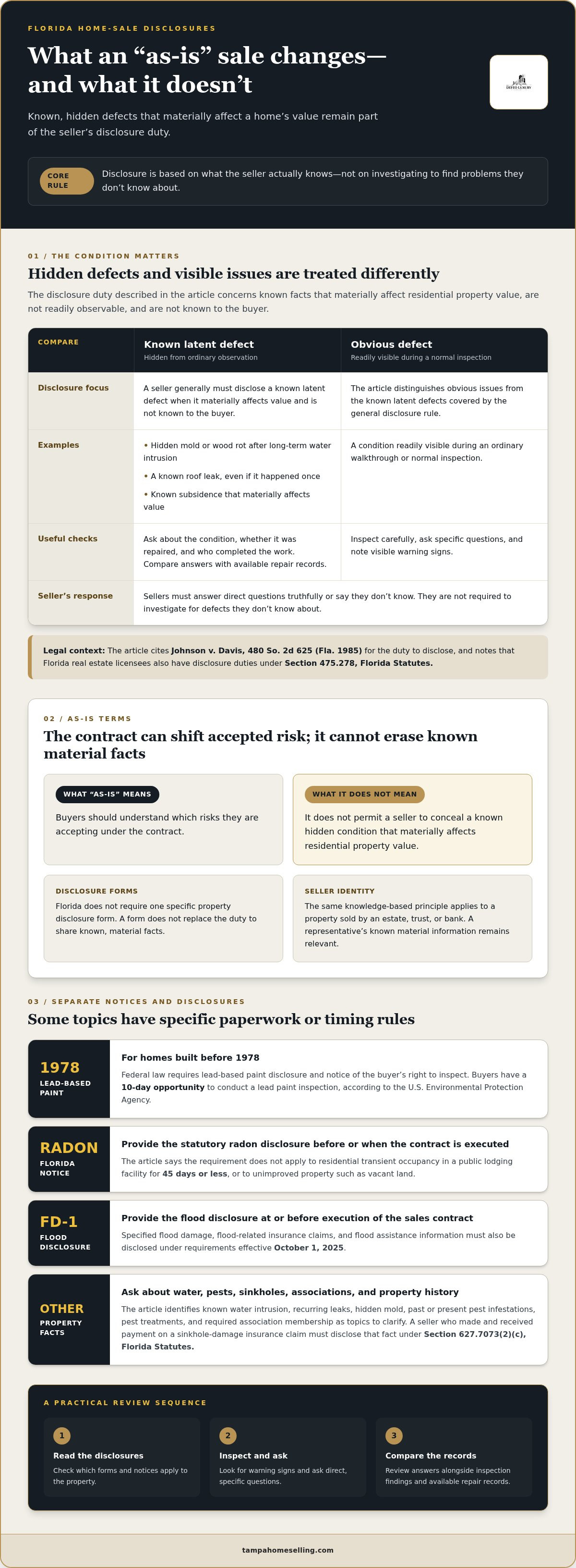
A latent defect is hidden from ordinary observation; an obvious defect is readily visible during a normal inspection. The distinction matters because sellers generally must disclose known latent defects that affect value, but not obvious issues. Buyers should inspect carefully, ask specific questions, and note visible warning signs. Sellers must answer direct questions truthfully or say they don’t know.
Examples of Defects and Hazards
Hidden mold or wood rot after long-term water intrusion can signal a latent defect; a known roof leak may matter even if it happened once. Ask whether the leak was repaired and who completed the work. For homes built before 1978, federal law requires lead-based paint disclosure and notice of the buyer’s right to inspect, according to the U.S. Environmental Protection Agency. Buyers have a 10-day opportunity to conduct a lead paint inspection, according to the U.S. Environmental Protection Agency.
Flooding, Water Damage, and Sinkholes
Florida requires sellers to provide the FD-1 flood disclosure at or before execution of the sales contract. Specified flood damage, flood-related insurance claims, and flood assistance information must also be disclosed under requirements effective October 1, 2025. Ask about known water intrusion, repairs, and recurring leaks. For sinkholes, a seller who made and received payment on a sinkhole-damage insurance claim must disclose that fact under Section 627.7073(2)(c), Florida Statutes. Known subsidence that materially affects value may also fall under the general disclosure rule.
What does the seller of a home have to disclose in Florida?
Florida real estate disclosures cover known material facts and specific statutory notices. Understanding seller's disclosure requirements in Florida means distinguishing general defect disclosures from notices required for particular properties.
Radon Gas Disclosures
Florida’s statutory radon gas disclosure gives buyers notice about radon risks and belongs in the real estate transaction paperwork. Sellers must provide it before or when the contract for sale and purchase of a building is executed. The requirement doesn’t apply to residential transient occupancy in a public lodging facility for 45 days or less, or to unimproved property, such as vacant land. Review the notice language in the contract so its timing and scope are clear.
Lead-Based Paint Disclosures
For a home built before 1978, federal law requires disclosure of lead-based paint and the buyer’s right to inspect, according to the U.S. Environmental Protection Agency. Buyers have a 10-day opportunity to conduct a lead paint inspection, according to the U.S. Environmental Protection Agency. This federal notice is separate from Florida’s radon disclosure. Check the age of the home and read the lead-related documents before signing, so the inspection opportunity is reflected in the transaction.
Environmental Hazards
Florida’s seller's disclosure requirements in Florida cover known facts that materially affect residential real property value and aren’t readily observable. Examples may include hidden mold following prolonged water intrusion, known past or present pest infestations, and pest treatments. Sellers don’t have to investigate to find unknown defects, but should answer direct questions truthfully or say they don’t know. Ask about previous moisture, termite activity, and remediation, and review available treatment or repair records. Realtors also have duties to disclose known, significant facts that aren’t readily observable to buyers.
Deaths, Crimes, and Paranormal Activity
Florida Statutes section 689.25 states that a property’s history as the site of a homicide, suicide, or death isn’t a material fact that must be disclosed in a real estate transaction. That rule addresses death history. For questions about crime or paranormal activity, ask the seller directly; Florida sellers must answer direct questions truthfully or state that they don’t know. Keep answers and related details with the transaction documents, rather than relying on assumptions about what a seller knew.
Disclosure obligations in as-is sales
The seller's disclosure requirements in Florida also apply to as-is sales: sellers must disclose known hidden facts that materially affect residential real property value. An as-is clause doesn’t permit a seller to conceal a known condition. Buyers should understand this distinction when deciding which risks they’re accepting under the contract.
Florida sellers’ disclosure duty is limited to issues they actually know about at the time of sale. They aren’t required to investigate the property for problems they don’t know exist. But an as-is clause or an incomplete disclosure form doesn’t cancel the duty to share known material information with buyers.
The same knowledge-based principle applies when a property is sold by an estate, trust, or bank. What matters is the seller’s actual knowledge of a material defect, not the seller’s identity alone. If a representative knows about a condition affecting value, as-is wording doesn’t make that information irrelevant to the transaction.
A known unresolved permit issue or failed repair, for example, may be material. Florida REALTORS® recommends disclosing potentially material information even when the form doesn’t ask about it specifically. The seller's disclosure requirements in Florida go beyond filling in form fields. Written details and available repair records can help buyers understand the issue and reduce disputes about what was shared.
Buyers can compare the contract and disclosure form with inspection findings and available records, then raise unanswered questions before closing. Sellers must answer direct questions truthfully or say they don’t know. If a material issue emerges during the transaction, documenting and communicating it promptly helps both parties make informed decisions. An as-is term can shape repair expectations, but it doesn’t authorize concealing known material facts about the property.
Florida seller disclosure forms
Florida doesn’t require sellers to use the Florida REALTORS® Seller’s Property Disclosure form. The form can help organize known facts, but it doesn’t replace separate notices required by law or the duty to disclose material information.
Florida REALTORS® recommends putting disclosures in writing, although they may be made verbally. Answer each relevant question carefully, describe known damage, and attach repair records, receipts, or reports when available. If the form doesn’t ask about a potentially material condition, disclose it separately rather than treating a blank field as an exception.
Several notices address specific residential property issues:
- Mandatory homeowners’ association membership must be disclosed under Section 720.401, Florida Statutes; condominium association membership is covered by Section 718.503.
- Possible coastal erosion and applicable coastal-property regulations must be disclosed under Section 161.57, Florida Statutes.
- The FD-1 flood disclosure must be given at or before execution of the sales contract.
- A prospective purchaser must receive a property-tax disclosure summary at or before executing the contract. The contract must also disclose that taxes may increase substantially after purchase under Section 689.261, Florida Statutes.
Other rules matter, too. Section 689.25, Florida Statutes, says a property’s history as the site of a homicide, suicide, or death isn’t a material fact requiring disclosure. Sellers must disclose specified flood damage, flood-related insurance claims, and flood assistance information under requirements effective October 1, 2025. For a pending code enforcement proceeding, required notice must be made before transfer; failure can create a rebuttable presumption of fraud under Section 125.69(4)(d), Florida Statutes.
To complete disclosures, gather relevant records, answer form questions accurately, add written details about known facts, and retain copies with the transaction documents. For listing preparation, plan your home sale with a property valuation alongside organized disclosure paperwork.
DeFeo Luxury Properties: 30-Day Home Selling System
DeFeo Luxury Properties’ 30-Day Home Selling System combines pre-listing inspections with AI-driven buyer targeting to help prepare a home for market. For sellers, an inspection before listing can bring property-condition questions into focus early, giving you time to organize relevant records and make informed decisions about what to disclose. It complements, but doesn’t replace, your duty to share known material facts.
If you’re preparing to sell, a structured approach to readiness and buyer outreach can help. Clear records and thoughtful preparation support a confident presentation of your home while keeping disclosure responsibilities transparent.
To discuss your selling plans, contact DeFeo Luxury Properties or visit tampahomeselling.com.
Make your next move with clarity
A real estate decision is easier to manage when your next step reflects your priorities. If you’re selling, keep a clear record of property information to support informed conversations and a confident transition. If you’re buying, focus on the questions and conditions that matter most to your plans. Understanding the seller's disclosure requirements in Florida gives you a stronger starting point, whether you’re preparing a home for market or evaluating a purchase.
DeFeo Luxury Properties offers options for different goals, including the VIP Buyer Program and Instant Cash Offer. Share your plans to explore which option fits your next move, while keeping the details that matter in view.
Contact DeFeo Luxury Properties to talk through your real estate plans. A thoughtful next step can help you move forward with confidence.
Frequently Asked Questions
What has to be disclosed?
Florida sellers must disclose known facts that materially affect a home’s value, aren’t readily observable, and aren’t known to the buyer. They don’t have to investigate to find unknown problems, but should answer direct questions truthfully or say they don’t know. A general property form isn’t the only consideration: separate statutory notices may apply to a particular home or transaction.
What About “As-Is” Sales?
An as-is clause doesn’t let a seller hide a known material defect. It generally addresses the property’s condition and the parties’ repair expectations, while disclosure duties remain tied to the seller’s knowledge. For example, a buyer and seller can negotiate how to handle a known repair, but the seller shouldn’t withhold that information during the sale.
What Are Material Defects In Real Property?
A material defect is a known condition that affects property value, isn’t readily observable, and isn’t known to the buyer. A hidden structural problem could qualify; a minor cosmetic flaw generally doesn’t. The circumstances matter, including the defect’s effect on the home and whether the buyer discovered it before closing. Buyers should document concerns and ask clear questions.
What Happens if a Seller Fails to Disclose?
A buyer who discovers that a seller knowingly withheld a material defect may face costly consequences and could have grounds to pursue damages. Before closing, a buyer may also have grounds to withdraw from the purchase contract. For example, evidence that a seller knew about recurring water intrusion may matter in a dispute over what was disclosed.
What Should Buyers Do to Protect Themselves?
Arrange a thorough inspection and review it alongside the seller’s disclosures; neither is a complete substitute for the other. Ask targeted questions about unusual odors, patched areas, or repairs, then keep written answers and relevant reports with your transaction records. A construction expert can help assess conditions a routine walkthrough may not reveal.
What if the home or property is being sold, or was sold, “As-Is”?
For a current sale, as-is wording doesn’t remove the seller’s duty to disclose known, hidden material defects. If you’ve already bought the property and later discover a defect, preserve inspection reports, seller communications, and repair records. A buyer’s nondisclosure claim generally has a four-year limitation period from when the buyer discovers or should have discovered the defect.