
How to set your asking price as a first-time home seller in Palmetto
The right asking price starts with recent sales of similar Palmetto homes, then accounts for your property’s condition, features, and current competition. This first-time home seller guide for Palmetto will help you choose a defensible price, budget for the sale, and prepare for the decisions ahead. Set your asking price based on what buyers are likely to value, not just the amount you hope to take away.
Selling for the first time can make every decision feel high-stakes, especially when you’re weighing a target price against repairs, inspections, and paperwork. A clear plan helps you move forward with confidence and avoid surprises.
Learn how to estimate your likely net proceeds, prepare for an inspection, and assess an offer’s terms. We’ll also explain how an agent can support your pricing strategy and what to review in title documents and insurance as the sale progresses, so you can approach each step with confidence.
Key Takeaways
- Use inspection findings to distinguish essential repairs from items you can disclose and address through negotiation.
- Estimate your net proceeds by accounting for sale-related expenses, outstanding obligations, and the costs of preparing your home.
- Ask an agent to support your asking-price strategy with comparable sales, property condition, and current competition.
- Review title records and insurance details carefully so ownership issues and transaction responsibilities are clear before closing.
Home inspections
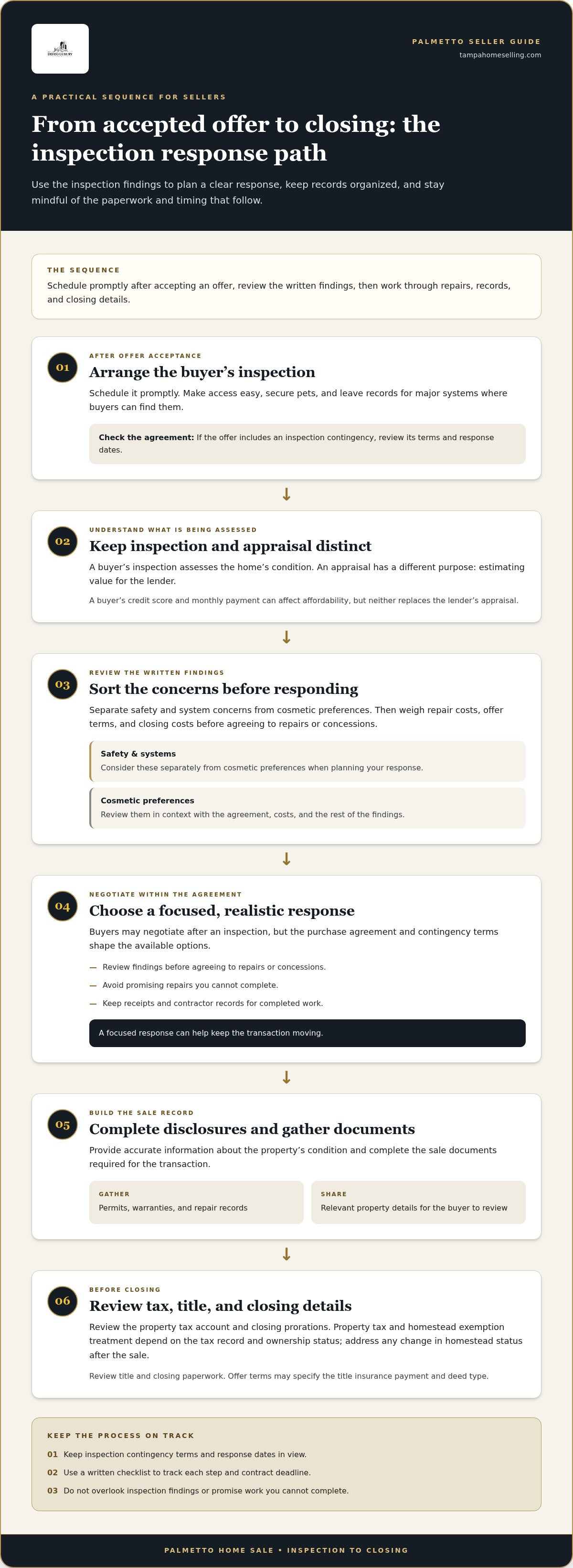
In Palmetto, schedule the buyer’s inspection promptly after accepting an offer. Use the findings to plan repairs, while keeping the appraisal, disclosure paperwork, and closing timeline in view.
-
Arrange the Home Inspection
Make access easy, secure pets, and leave records for major systems where buyers can find them. Buyers use an inspection to assess the home’s condition; an appraisal has a different purpose: estimating value for the lender. If the offer includes an inspection contingency, review its terms and response dates. A buyer’s credit score and monthly payment can affect what they can afford, but neither replaces the lender’s appraisal.
-
Negotiate Inspection Repairs
Review the written findings before agreeing to repairs or concessions. Separate safety and system concerns from cosmetic preferences, then weigh repair costs, offer terms, and closing costs. Buyers may negotiate after an inspection, but the purchase agreement and contingency terms shape the available options. Keep receipts and contractor records for completed work, and avoid promising repairs you can’t complete. A focused response can help keep the transaction moving.
- For Florida disclosures and forms, provide accurate information about the property’s condition and complete the sale documents required for the transaction. Gather permits, warranties, and repair records so the buyer can review relevant details.
Property taxes and homestead exemption treatment depend on the property’s tax record and ownership status. Review the tax account and closing prorations, and address any change in homestead status after the sale.
- Palmetto’s current median sale price is a market reference, not a recommended asking price. Compare similar nearby sales, adjusting for condition, features, and competition. Selling timelines vary with pricing, presentation, and buyer demand.
To sell for the first time, prepare records, set a market-based price, list the home, review offers, manage inspection and appraisal steps, then complete title and closing paperwork. Before listing, address visible maintenance issues and organize documents. Common risks include overpricing, overlooking inspection findings, and missing contract deadlines. Use a written checklist to track each step.
Preparing finances and setting a budget
Build your selling budget around estimated proceeds, upcoming expenses, and the cost of your next move.
- List the obligations that will come out of your proceeds. Include your mortgage payoff, agreed repairs, moving costs, and transaction expenses, separating confirmed amounts from estimates. This gives you a clearer picture of what may be left after closing. Keep a reserve for overlapping housing payments if your next home purchase closes before your Palmetto sale.
- Set a limit for pre-listing work before scheduling upgrades. Prioritize repairs that address function or condition, then weigh optional improvements against their likely benefit to buyers. Save invoices and records for completed work. Don’t spend based only on a neighbor’s renovation or a feature you personally prefer; buyers consider condition, layout, and price together.
- If you’re also shopping for a home, budget for the full monthly payment, interest, taxes, insurance, and any association fees. In 2026 so far, 30-year fixed-rate mortgage rates have been between 6 percent and 6.5 percent. The average annual cost of owning and maintaining a single-family home was more than $18,000 in 2024, so include upkeep beyond the mortgage.
- Plan upfront cash and upgrades for your next purchase separately from your sale proceeds. A new-construction purchase may involve rate locks and updated lender documents during construction, so keep your income and financial paperwork current. Avoid treating an appraisal estimate or expected sale amount as spendable cash before closing. For a pricing starting point, use this home valuation resource, then build your budget around the costs and timing that apply to your move.
Homebuyers should typically budget 2%-5% of the purchase price for closing costs.
Working with a real estate agent
Choose support that matches your priorities, then compare the services, agreement, and responsibilities involved in the transaction.
-
Choose a Real Estate Agent
When interviewing agents, ask about Palmetto pricing, marketing, offer review, and communication. Find out how they use comparable sales and property condition to shape an asking-price strategy. This first-time home seller guide for Palmetto homeowners also recommends reviewing the listing agreement’s duration, services, and compensation terms before signing. Choose an agent who explains trade-offs clearly and can help assess buyer financing, including conventional mortgages and VA loans for eligible veterans.
-
Compare Selling Options and Costs
Compare agent-assisted selling with selling by owner by listing the work you’ll handle yourself. An agent can guide pricing, marketing, negotiations, and closing coordination; selling by owner means managing those tasks directly. Florida seller closing costs depend on the transaction and negotiated terms. Real estate commissions aren’t a fixed statewide amount, so discuss proposed compensation and services in writing. Keep a first-time home seller guide Palmetto sellers can refer to focused on those practical comparisons, not assumptions about one route always being cheaper.
- Review each offer beyond its headline price. Offers may specify the purchase price, closing date, expense prorations, title insurance payment, deed type, and contingency clauses. Compare financing, requested concessions, and deadlines, since an interest rate or appraisal result can affect a buyer’s ability to proceed. A seller typically has 24 to 48 hours to respond to an offer, so agree on a process for reviewing terms promptly.
- Keep the transaction organized after acceptance. Track inspection and appraisal milestones, lender requests, title review, and closing documents in one calendar. Buyers typically finalize their mortgage and address negotiated repairs between acceptance and closing. The buyer’s lender approval and ability to qualify matter alongside the offer amount. Confirm who is handling each task and keep written updates so a missing document or unresolved contingency doesn’t disrupt closing.
Title review and title insurance
Organize ownership, mortgage, and insurance records early. A clear document trail helps keep your Palmetto closing on track.
- Gather the deed, mortgage statements, and records of ownership changes. The title company reviews the property’s history and identifies matters that need attention before closing. Share records for a name change, inheritance, or prior transfer, if applicable. Compare the names and property description on the deed with your records, and flag any mismatch promptly.
- Review the title commitment and its listed requirements carefully. Look for recorded liens, unresolved mortgages, easements, or other matters affecting the property. Ask how each listed item will be addressed before the deed transfers. The purchase offer may specify who pays for title insurance, so compare that term with the closing estimate and keep the agreed responsibility clear.
- Read the title insurance documents before signing. Identify the policy type, insured party, coverage terms, and exclusions shown in the paperwork. Title insurance doesn’t cover physical damage or replace homeowners insurance. Keep the final policy with your closing documents, alongside the deed and settlement statement, so you can find the transaction record later.
- Contact your homeowners insurance provider as you prepare to transfer ownership. Confirm the policy’s end date and ask how to handle any open claim, repair, or premium balance. For example, document a roof claim that is still being processed for the buyer and include it in closing discussions. Keep housing expenses and insurance payments organized through the transfer.
- Check the closing statement against your mortgage payoff and agreed expenses. The title company coordinates the review of the property’s history, while the escrow agent collects and disburses sale proceeds at closing. Confirm that the payoff and prorations appear as expected, and retain signed documents. To connect your estimated sale value with your financial planning, use this home valuation resource.
DeFeo Luxury Properties: 30-Day Home Selling System
DeFeo Luxury Properties’ 30-Day Home Selling System gives Palmetto sellers a structured way to prepare and market a home. It combines pre-listing inspections with AI-driven buyer targeting, helping you address condition concerns before listing and reach relevant buyers. Consider this approach if you want coordinated support with preparation, positioning, and buyer outreach after setting your price and reviewing the sale process.
If you’re weighing a conventional listing against a different route, the Instant Cash Offer provides another option to consider. The right path depends on your priorities, property, and preferred selling approach. You can explore the available options and decide what fits your next step.
Visit tampahomeselling.com to learn more about selling your Palmetto home.
Set Your Next Move in Motion
Your asking price is more than a number. It signals how you’re entering the market and shapes the choices that follow. Use this first-time home seller guide for Palmetto as a starting point, then decide what matters most: support with a traditional listing, another sale route, or planning for your next home. Being clear about your priority can make your next conversation more productive.
DeFeo Luxury Properties offers the 30-Day Home Selling System, Instant Cash Offer, and VIP Buyer Program. These options serve different situations, from preparing to sell to exploring a purchase. Focus on the path that fits your plans, and bring your priorities into the discussion rather than feeling you must settle every detail alone.
When you’re ready to discuss your next step, contact DeFeo Luxury Properties. Take the process one decision at a time, and move forward with confidence.
Frequently Asked Questions
What inspections, repairs, and permits are commonly needed when selling a Palmetto home?
A pre-sale inspection can help identify concerns before buyers arrange their own review. For a Palmetto home, focus on the roof, electrical and plumbing systems, HVAC, drainage, and visible moisture. Keep permits, contractor invoices, warranties, and plans for additions together; records for a converted porch, for example, can clarify its history. Address material safety or function issues first, then document completed repairs for buyers.
How do flood zones, hurricane risk, and insurance affect selling a home in Palmetto?
Flood-zone designation and hurricane exposure can shape buyer questions about insurance, property condition, and financing. Organize your current homeowners insurance documents and records of prior claims, roof work, drainage improvements, or storm shutters. For example, a buyer may want details about a repaired roof or past water intrusion when assessing the home. Clear records explain the property’s history and help buyers evaluate coverage and expenses.
What Florida disclosures and forms must a home seller provide?
Provide accurate information about the property’s condition and complete the sale documents required for the transaction. Gather permits, warranties, and repair records for the buyer to review.
What are Florida property tax and homestead exemption rules when selling a home?
Property taxes and homestead exemption treatment depend on the property’s tax record and ownership status. Review the tax account and closing prorations, and address any change in homestead status after the sale.