
How to downsize your home in Bradenton and compare housing options
There’s no single age when you should downsize; the right time depends on whether your home still fits your lifestyle, finances, and plans for the years ahead. If you’re considering downsizing your home in Bradenton, compare the ongoing costs of smaller-home options as well as their space and upkeep. Think about whether a new home will serve you over the next 5, 10, or even 20 years.
It’s natural to focus on having less space, but the financial picture matters too. A smaller home may reduce insurance, property taxes, and utility bills, while selling and moving costs can affect your overall budget.
This guide explains how to recognize when a move may make sense, compare single-family homes, townhomes, condos, apartments, and other options, and account for the costs beyond the purchase. You’ll also learn how a local agent can help coordinate the sale and next purchase, so you can make a well-informed move that fits your life on the Gulf Coast.
Key Takeaways
- Assess your lifestyle, finances, moving costs, and potential home-sale tax exclusion before deciding when to downsize.
- Coordinate the sale and next purchase around your timing, budget, and preferred move plan with a local agent.
- Compare single-family homes, townhomes, condos, and apartments by space, upkeep, and how each fits your daily routine.
- Look beyond the purchase price: consider how a smaller home may affect insurance, property taxes, and utility bills.
What are the benefits of downsizing your home?
Moving costs in Bradenton depend on distance, belongings, packing needs, access at both homes, and timing. Compare estimates using the same details, then add selling, storage, and replacement-furniture costs to your budget.
- Set your priorities before sorting. Write down what a smaller home should improve, such as easier upkeep, lower household expenses, or more freedom for living near family. Then consider how those priorities fit your real estate plans. A clear goal helps you decide which belongings deserve space in your next home.
- Review the possible tax exclusion. According to the Internal Revenue Service, a homeowner generally must have used a home as a primary residence for at least 2 of the previous 5 years to qualify for the federal home-sale gain exclusion. A married couple can generally exclude up to $500,000 of gain from capital gains tax on the sale of a qualifying primary home, according to the Internal Revenue Service.
- Sort belongings into four groups. Label boxes “keep,” “donate,” “sell,” and “give away.” For example, keep the dining set if it fits your next floor plan, sell extra chairs, donate usable kitchen items, and offer family keepsakes to relatives. Finish one room before moving to the next.
- Make a thoughtful plan for sentimental items. Choose a small, practical collection of photographs, heirlooms, or letters to keep. Ask relatives whether they want specific pieces before selling or donating them. Photograph bulky items with family stories attached, so you can preserve their memories without storing every object.
- Measure furniture against the next home. Record the dimensions of beds, sofas, and dining tables, then compare them with room measurements and doorways. A sectional that dominates a smaller living room may be better sold before moving. Include storage needs for seasonal belongings in your layout plan.
- Declutter with the move timeline in mind. Set aside items for donation or sale early, rather than paying to move belongings you won’t use. For furniture with family value but no room, agree on a temporary storage plan and a clear decision point for keeping or passing it on.
Choosing a local agent to coordinate both transactions
In Bradenton, start by comparing neighborhoods with low-maintenance homes, convenient services, and the lifestyle you want. Bradenton has neighborhoods described as 55+ communities; fees and restrictions vary, so compare each community’s costs and rules for age, occupancy, pets, and leasing.
- Define your next-home priorities. Ask yourself, “How should I approach downsizing my home in Bradenton?” List the features that would make daily living easier, such as one-floor access, a smaller yard, or nearby shops. Decide whether you want to stay near your current home or move within the same community. These choices give a real estate agent a practical search brief.
- Compare buying with renting. A smaller home may suit you if you want to own, while a rental may offer flexibility without buying another property. Compare the full housing costs, storage needs, and expected length of stay. Include space for remote work if a quiet workspace matters to your routine.
- Choose an agent who can map both timelines. Ask for a clear sequence covering home preparation, listing, showings, offers, closing, and the next move. Discuss whether you want to find the replacement home before listing or prefer to sell first. A written plan can reduce timing stress.
- Use local knowledge to narrow the search. Ask the agent to compare Bradenton options by home type, upkeep, access to services, and fit with your daily habits. For a 55+ community, compare its fee schedule and rules with other shortlisted homes before deciding.
- Set a decision point for your current home. Ask, “What should I prioritize when downsizing my home in Bradenton?” Review the home’s likely sale value alongside the cost and timing of your next home. A current-home valuation can help frame that comparison. Then align the listing plan with your preferred move date and purchase strategy.
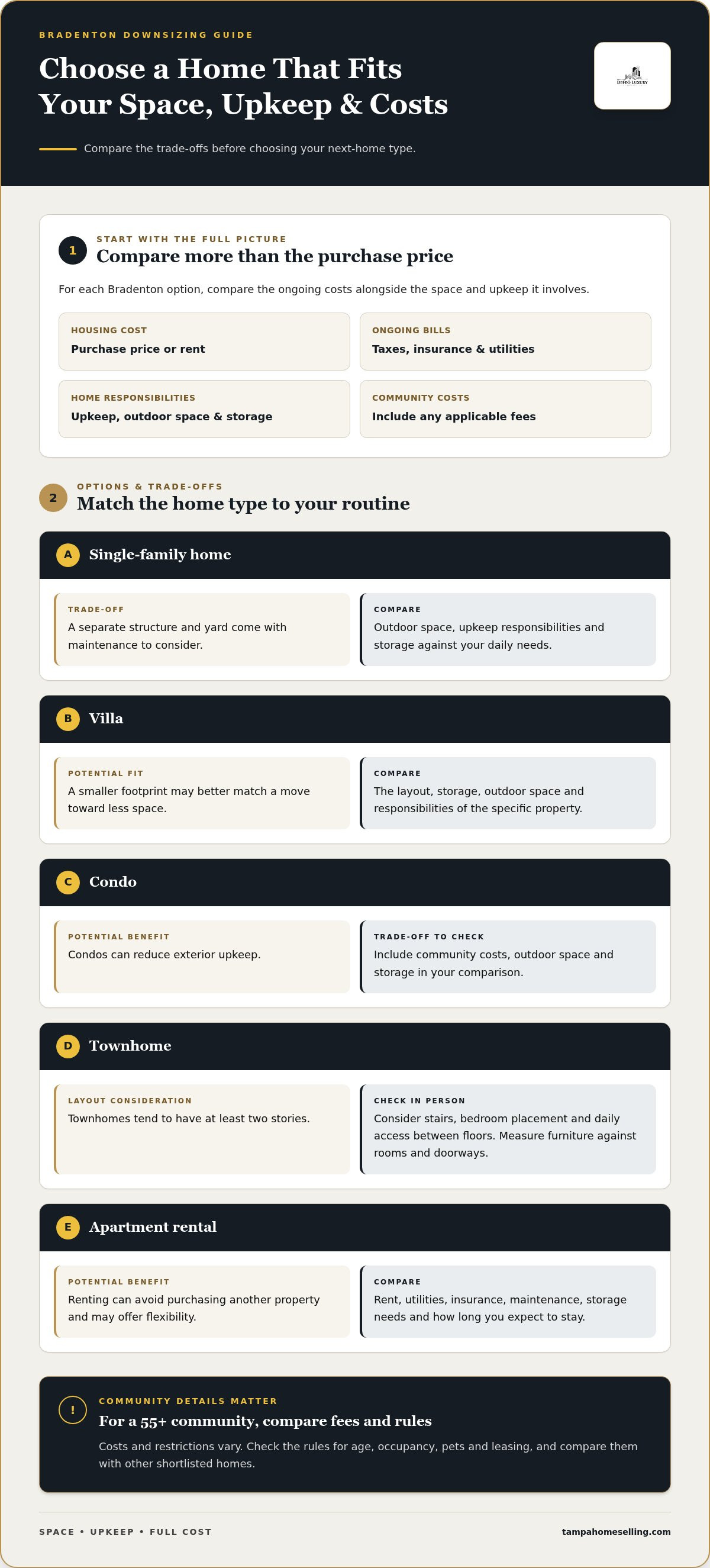
Comparing single-family homes, townhomes, condos, and apartments
Compare the full cost of each Bradenton option, including purchase or rent, taxes, insurance, utilities, upkeep, and community fees. For a 55-plus community, add its fees and rules to the same comparison so the total reflects your budget and lifestyle.
- Choose your space and upkeep priorities. A single-family home gives you a separate structure and yard to maintain. A villa may offer a smaller footprint, while condos can reduce exterior upkeep but include community costs. Compare each property’s responsibilities, outdoor space, and storage before deciding what suits your daily routine.
- Check townhome layouts in person. Townhomes tend to have at least two stories, so consider stairs, bedrooms, and daily access between floors. Measure whether furniture fits comfortably and whether the layout supports guests, hobbies, or a quiet work area.
- Compare ownership with renting. An apartment rental can avoid purchasing another property, while buying a smaller home may suit someone planning to stay longer. Compare rent or purchase costs alongside utilities, insurance, maintenance, and any community fees. Include the value of flexibility in your decision.
- Review property taxes before choosing. Downsizing may change your tax bill, because buying a replacement home can start its taxable value at its current valuation. Compare the current home’s tax bill with the replacement property’s estimated taxes, and include the effect in your ongoing-cost calculation.
- Account for homestead exemption and reassessment. Treat your current property-tax bill as a reference, not a guaranteed forecast for the next home. Compare the replacement home’s taxable value and available homestead exemption details when estimating costs. This helps distinguish the listing price from the amount that shapes future property taxes.
- Use a consistent comparison sheet. Create one column for each option: single-family home, townhome, villa, condo, or apartment. Add space, upkeep, taxes, insurance, utilities, fees, and location. This makes trade-offs visible while finding a home that fits your family and your next stage of living.
Lower home insurance, property taxes, and utility bills
When comparing homes in Bradenton, review each property’s flood exposure, hurricane protections, and insurance terms. Consider the address, coverage limits, exclusions, and deductibles together to understand how the property and coverage affect your insurance decision.
- Compare insurance for specific homes. Request estimates using each property’s address and features, rather than relying on the current home’s premium. Smaller homes may have lower premiums, but coverage needs and property characteristics also matter. Compare the same types of coverage and limits to make the estimates useful.
- Look beyond the home’s purchase price. Add insurance, property taxes, utilities, and community fees to your housing comparison. For example, a condo with less exterior upkeep may still have recurring fees. A smaller single-family home may offer different maintenance responsibilities and insurance needs.
- Estimate property taxes for the replacement home. A smaller property may have a lower tax bill because it has less square footage. But buying a replacement home can start its taxable value at its current valuation, affecting future property taxes. Compare the new home’s valuation with your current tax bill.
- Compare utility needs room by room. A smaller home generally takes less energy to heat and cool, which can lower utility bills. Consider the layout, windows, and cooling needs when comparing homes. A compact floor plan with unused rooms may not deliver the savings you expect.
- Build a moving-year budget. List the expected carrying costs for both homes during the transition, plus moving and selling expenses. Separate one-time costs from ongoing insurance, taxes, and utilities. This helps you decide whether projected savings support the move and your next-home budget.
- Review the sale proceeds alongside ongoing costs. Compare the current home’s likely value with the cost of the replacement property and its recurring bills. A home value estimate can inform that comparison as you plan your finances and timing.
DeFeo Luxury Properties: 30-Day Home Selling System
DeFeo Luxury Properties’ 30-Day Home Selling System is a natural next step when you’re preparing to sell your current home and coordinate a move. It combines pre-listing inspections and AI-driven buyer targeting to support the selling process and help position the property effectively.
As you compare replacement homes, DeFeo Luxury Properties’ VIP Buyer Program provides access to off-market listings and includes a one-year home warranty. This can help connect your sale plans with your search for a smaller home. If you’re considering another way to sell, the Instant Cash Offer is an option. The Love It or Leave It Guarantee applies to the buyer program.
Discuss your timing, priorities, and next-home plans with DeFeo Luxury Properties, or visit tampahomeselling.com to explore your next step.
Make Your Next Move with a Clear Plan
Downsizing my home in Bradenton can mean more than changing addresses; it can reshape how you spend your time and manage your home. Before taking the next step, write down your preferred move timing, must-have features, and acceptable trade-offs. This gives your sale and home search a practical starting point.
DeFeo Luxury Properties can help you consider how its 30-Day Home Selling System fits your sale, while the VIP Buyer Program supports your search for a next home. If a different selling approach better suits your plans, ask about the Instant Cash Offer. The right conversation begins with your priorities and the options you want to weigh, not a one-size-fits-all plan.
Contact DeFeo Luxury Properties to talk through your next move. With a clear set of priorities, you can move toward a home that better fits the life you want in Bradenton.
Frequently Asked Questions
At what age should you downsize your house?
There’s no single age that makes downsizing the right choice. Consider whether your home still works for your mobility, household budget, and plans for the next 5, 10, or 20 years. For example, moving while you feel physically flexible may make sorting and relocating easier. Focus on changing needs and preferred lifestyle, rather than waiting for a particular birthday.
How do property taxes and homestead exemptions work when downsizing in Manatee County?
Compare the current home’s tax bill with the replacement home’s taxable value and homestead exemption status. Buying another property can set its taxable value at its current valuation, so don’t assume your existing tax bill will carry over unchanged. Before budgeting, review the replacement property’s assessment and ask the Manatee County Property Appraiser how homestead exemption eligibility and application requirements apply to your situation.
What steps should I take to declutter, sell, and move to a smaller home?
Set a target move date and create an inventory of furniture, boxes, and items needing special handling. Decide what to keep, sell, donate, or pass on to family, then arrange pickups or sales before packing. Pack an essentials box with medications, chargers, documents, and a change of clothes. Keep it accessible on moving day rather than loading it with household boxes.
How can I estimate the value of my Bradenton home and prepare it for sale?
Ask a real estate agent for a market analysis based on comparable Bradenton properties, then discuss differences in layout, condition, lot, and recent improvements. Gather receipts, warranties, and records for major updates, such as a roof replacement or kitchen renovation. These details help explain your home’s condition and features. Before listing, address visible maintenance issues and organize documents buyers may want to review.
What are the best neighborhoods in Bradenton for downsizing and low-maintenance living?
Look for Bradenton neighborhoods with low-maintenance homes and convenient services. 55+ communities may be an option; compare their fees and rules for age, occupancy, pets, and leasing.