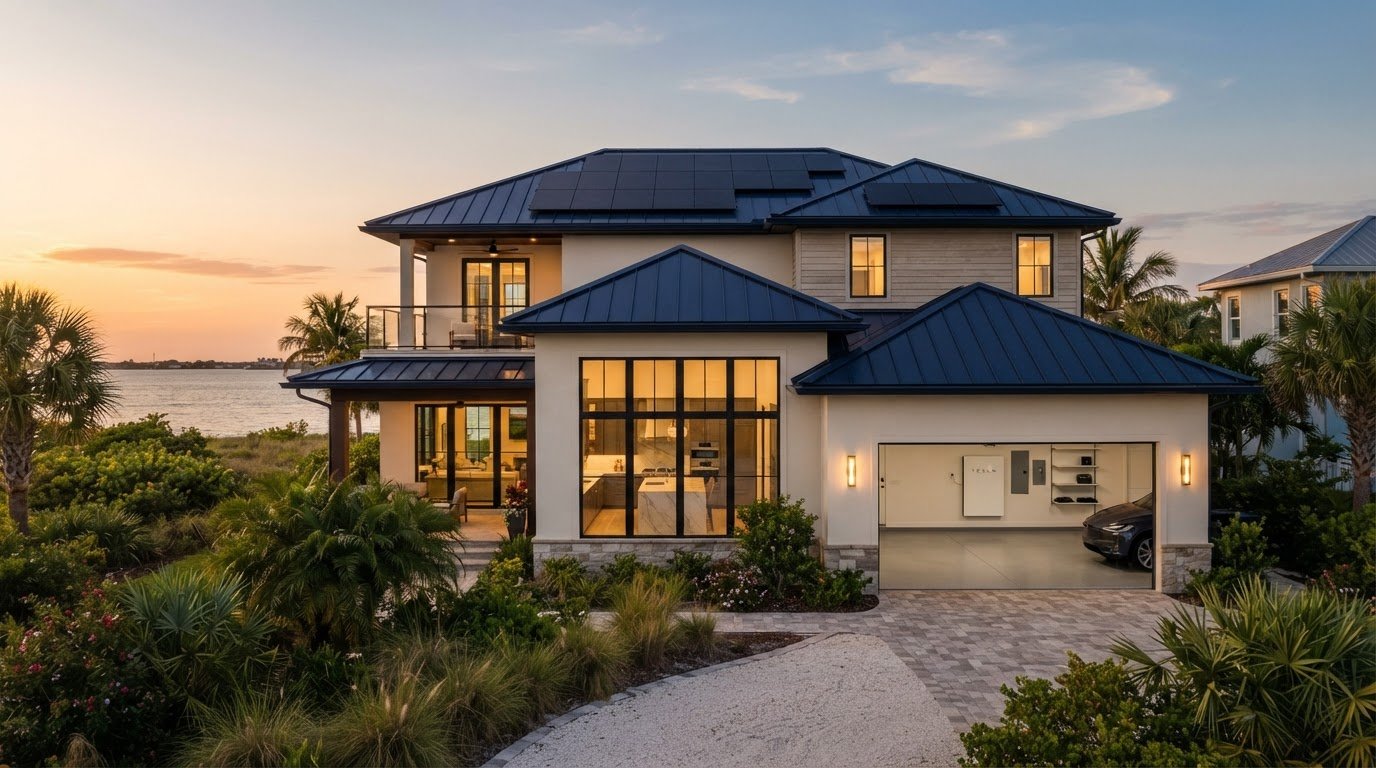
Eco-friendly home upgrades for resale value in Gulfport
Start with practical improvements buyers can understand: attic insulation and air sealing, energy-efficient appliances, and solar panels with battery backup. The best eco-friendly home upgrades for resale value in Gulfport address everyday comfort and energy use, and are easy to explain when you list your home. Pair the improvements with thoughtful marketing that shows buyers what you upgraded and why it matters.
Focus on features that can support lower energy use and appeal to buyers, without assuming every upgrade will deliver the same resale value. The right choices depend on your home’s condition, existing systems, and selling plans.
This guide covers where to focus, from insulation and kitchen appliances to solar power, and how to present those features to buyers. You’ll have a clearer way to weigh improvements before investing and make your home’s eco-friendly updates part of a strong resale story.
Key Takeaways
- Start with attic insulation and air sealing to address comfort and energy loss before choosing larger upgrades.
- Compare efficient kitchen appliances and countertop options, and note that ENERGY STAR says its refrigerators are about 9% more energy efficient than the federal minimum standard.
- Weigh solar panels and battery backup against your household’s energy needs and the benefits you want to highlight for buyers.
- Make eco features part of your listing story by clearly explaining what was upgraded and how those features support everyday living.
1. Attic insulation and air sealing
Start in the attic, where insulation and sealed gaps can reduce unwanted heat transfer. Before adding material, look for roof leaks, damp spots, compressed insulation, and gaps around wiring or pipes. Seal appropriate openings, then install insulation suited to the attic’s existing conditions. The benefit depends on the home’s current insulation, air leakage, and heating and cooling use.
Gulfport’s humidity, hurricane exposure, flood risk, and salt air make moisture management important. Humidity and wind-driven rain can bring moisture into vulnerable areas, so address leaks and drying conditions before sealing the attic. Flood risk mainly affects lower parts of the home, but it’s a reminder to assess moisture pathways throughout the structure. Salt air can affect exposed metal components, so choose suitable materials and protect attic openings from water entry.
Eco-friendly insulation offers alternatives to standard fiberglass. Natural wool and recycled denim are options, while mineral wool is fire resistant, breathable, and performs well in damp conditions. Match the material to the attic’s moisture exposure and installation needs. Radiant barriers reflect radiant heat rather than replacing insulation, so consider how one would complement the attic’s existing thermal protection.
For resale, keep clear records of the work. Save the installer’s details, product information, and available documentation, then describe the improvement accurately in listing materials. Don’t claim a specific bill reduction unless household records support it. Buyers can understand “sealed attic gaps and added mineral wool insulation” more readily than a vague claim of an eco-friendly renovation. This practical detail presents insulation as a comfort and efficiency upgrade, not just hidden material above the ceiling.
2. Energy-efficient kitchen appliances and eco countertops
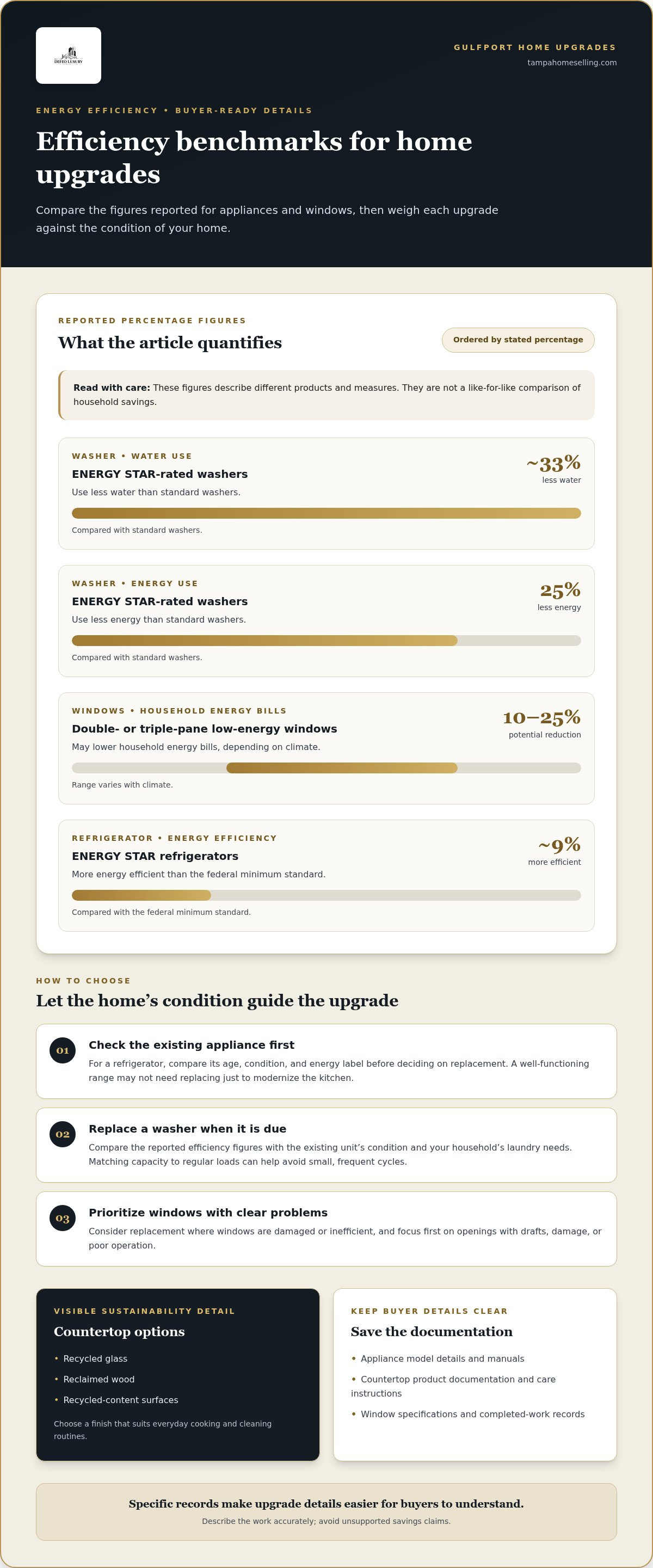
Choose kitchen appliances that improve efficiency without forcing a full room redesign. ENERGY STAR says its refrigerators are about 9% more energy efficient than the federal minimum standard. Compare the existing refrigerator’s age, condition, and energy label before deciding whether replacement makes sense. A well-functioning range may not need replacing just to modernize the kitchen. Keep appliance model details and manuals together so buyers can understand what’s installed.
Countertops can add a visible sustainability detail through materials such as recycled glass, reclaimed wood, or recycled-content surfaces. Consider the kitchen’s everyday use before choosing a finish. Cooking habits, cleaning routines, and nearby cabinet condition all affect whether a material suits the space. Keep product documentation and care instructions with your renovation records, giving buyers specific information about the surface instead of relying on a broad “green” description.
Laundry upgrades can address both energy and water use. ENERGY STAR-rated washers use 25% less energy and about 33% less water than standard washers. If an older washer is due for replacement, compare those figures with the existing unit’s condition and your household’s laundry needs. Matching the washer’s capacity to regular loads can also help avoid running small, frequent cycles. Save the model information to include with the home’s appliance details.
Windows affect how much heat moves through the home, so replacement can be worth considering when existing windows are damaged or inefficient. Double- or triple-pane low-energy windows may lower household energy bills by 10% to 25%, depending on climate. Prioritize the windows with the clearest signs of drafts, damage, or poor operation rather than assuming every opening needs replacement. Before choosing a project, use a home valuation to frame upgrade decisions around your resale plans. Record the window specifications and completed work for clear buyer-facing details.
3. Solar panels and battery backup
A rooftop solar system can reduce reliance on grid electricity and give buyers a visible efficiency feature. However, it may take a decade or longer to break even on installation costs. Compare those figures with your expected time in the home, current electricity use, roof condition, and remaining roof life before committing.
Battery backup stores solar-generated electricity and can support emergency use during an outage. Consider how the battery fits your household’s power needs, which loads matter most, and how you’ll explain the equipment to buyers. Keep system documents, warranties, utility information, and installation records together. Clear records help buyers understand what transfers with the home and how the system operates.
For Gulfport, plan around three review areas: local permits, applicable building and electrical codes, and utility interconnection rules. Requirements depend on the property, roof, equipment, and system design, so keep approvals and utility arrangements with the installation records.
Solar’s resale appeal rests on more than panels on the roof. Buyers can better assess the upgrade when listing details explain system ownership, documented energy production, and any battery backup. Avoid promising a specific resale premium or savings beyond the available records. A well-documented system gives prospective buyers concrete information to weigh alongside roof condition and household energy needs.
Landscaping can complement energy upgrades with native or drought-friendly plants that support local habitat and reduce upkeep and water use. Permeable patio pavers and swales help rainwater soak into the ground, while smart irrigation adjusts watering schedules to site conditions. These features can improve curb appeal and manage runoff without relying on a large lawn. As a practical first step, replace a hard-to-maintain planting area with native plants and direct runoff toward permeable surfaces.
4. Marketing eco features with a green-savvy real estate agent
Eco upgrades are easier to evaluate when buyers can see what changed and why it matters. Build a feature sheet that names each improvement, its location, installation date, and available documentation. For example, describe an attic air-sealing project using the installation records rather than a broad “energy efficient” label. Specific details help buyers distinguish completed work from future possibilities.
Use listing photos and captions to connect visible features with practical benefits. Show solar panels from an angle that makes their placement clear, then pair the image with system documents. For less visible upgrades, include a concise note about the work and supporting records. Keep claims aligned with evidence: describe documented equipment and work, but don’t promise buyers a particular utility-bill reduction.
A thoughtful listing strategy also puts upgrades in context. Organize records for insulation, appliances, windows, solar equipment, and landscaping, then make them easy to review during showings. Explain how features work together, such as sealed attic gaps alongside insulation or permeable paving alongside a rain garden. This gives buyers a coherent picture instead of a scattered list of products.
Florida or federal rebates and tax credits depend on the specific upgrade and eligibility requirements. In a Gulfport listing, distinguish incentives you actually received from potential benefits a buyer might pursue, and describe credits only when official program records support the claim.
Before listing, ask your agent to review the feature sheet, photographs, and supporting records together. That review can sharpen the home’s marketing story and flag descriptions that need more precise wording. If you’re preparing to sell, request a home valuation to put your upgrade decisions in the context of your resale plans. Clear documentation and accurate language let buyers assess the improvements with confidence.
DeFeo Luxury Properties: 30-Day Home Selling System
DeFeo Luxury Properties’ 30-Day Home Selling System combines AI-driven buyer targeting with pre-listing inspections to support a focused sale strategy. If you’re preparing to sell after making eco-friendly upgrades, those inspections can help identify property details to address, while buyer targeting helps put the home in front of prospective buyers. Share your upgrade records so the home’s features can be presented clearly and accurately.
This approach suits homeowners ready to plan a listing and explain improvements with documentation, not broad claims. If you’re weighing a direct sale instead, DeFeo Luxury Properties also offers an Instant Cash Offer. The right next step depends on your selling priorities and the process you want.
To discuss selling your home, visit tampahomeselling.com.
Make your next move with a clear selling plan
Turn upgrade decisions into a practical sale plan by deciding what deserves attention before listing and what simply needs documentation. Eco-friendly home upgrades for resale value in Gulfport work best as part of a clear account of the home, not a promise of a particular buyer response. Keep priorities grounded in the property’s condition and the features you can accurately describe.
As you prepare, consider how buyers will understand the home’s improvements and what information will help them assess the property. A focused conversation about timing, presentation, and your selling goals can help you choose a sensible path forward. DeFeo Luxury Properties offers options for sellers, including a 30-Day Home Selling System and an Instant Cash Offer, so you can discuss which direction fits your plans.
Contact DeFeo Luxury Properties today to take the next step with confidence.
Frequently Asked Questions
What to add?
Prioritize improvements that solve visible or documented problems, then choose upgrades that fit your plans. For example, address attic air leaks before adding insulation, replace an inefficient appliance when it’s due for replacement, and assess solar after considering roof condition and household electricity use. Keep receipts and product details together so buyers can understand what was improved and how the work relates to the home.
Which eco-friendly home upgrades add the most resale value in Gulfport, Mississippi?
The question names Mississippi, but this article focuses on Gulfport, Florida. For a Gulfport home, start with upgrades that address the property’s actual condition, such as improving attic insulation or replacing an aging appliance. Solar may appeal to buyers when ownership and operating records are clear. The strongest choice depends on the home’s needs and how well the improvement is documented, not on a universal ranking.
What is the typical cost and return on investment for energy-efficient windows in Gulfport?
That bill reduction isn’t the same as a resale return. Compare window condition, how many need replacement, and expected energy use. Prioritizing damaged or poorly operating windows focuses the project on a clear home issue.
How much can solar panels increase a Gulfport home's resale value, and what do they cost?
Installation costs may take a decade or longer to break even. A resale premium isn’t fixed: buyers will weigh system ownership, documented performance, roof condition, and remaining equipment life. Keep those records available so prospective buyers can assess the system’s value to them.
Which insulation and air-sealing upgrades work best in Gulfport's hot, humid climate?
Seal attic openings around wiring and pipes, and address roof leaks before adding insulation. Natural wool, recycled denim, and mineral wool offer alternatives to fiberglass; mineral wool is breathable and performs well in damp conditions. The right approach depends on moisture exposure and the attic’s current state. For example, address damp areas first, then select insulation suited to those conditions and document the completed work.
What are typical costs and savings for high-efficiency HVAC upgrades in Gulfport?
Replacing an older electric or gas system with a heat pump may reduce household energy use by 30% to 60%. The practical comparison is the existing system’s condition and energy use against the replacement system’s needs. Keep equipment information and service records, so buyers can evaluate the HVAC upgrade alongside the home’s other features.