
Selling a Home With Solar Panels in Tampa: A Seller’s Guide
What if your solar panels attract one Tampa buyer but raise questions for another? Selling a home with solar panels in Tampa starts with clarifying who owns the system and what happens to any loan or lease at closing. Buyers need to understand the panels’ condition, energy records, and any ongoing obligations before they can assess how the system fits their plans.
Start by gathering the solar agreement, utility records, and system documentation. Clear answers can help prevent confusion and give buyers a better basis for evaluating the property. This guide explains how to organize solar paperwork, present ownership and payment terms, and describe system condition and performance accurately. It also covers how a pre-listing inspection and documentation package can help you prepare your home for buyers across Tampa Bay.
Key Takeaways
- For selling a home with solar panels in Tampa, buyer value depends on the property and how clearly the system’s ownership and terms are presented.
- Identify whether the system is owned, financed, leased, or covered by a power purchase agreement, then explain what the contract says about a sale.
- Organize solar records and describe documented system condition without promising specific savings or future energy production.
- The Pre-Owned Pre-Certified Home Program includes a pre-listing inspection, giving you advance insight into findings and time to consider repairs, credits, or pricing.
Selling a Tampa Home With Solar Panels: Start With Ownership and Buyer Value
Selling a home with solar panels in Tampa is easier to navigate when buyers can see what comes with the property and what obligations remain. Before listing, gather the ownership details, system records, and agreement terms. This lets prospective buyers assess the solar setup alongside the home’s other features instead of guessing how it works.
Expect questions about system condition, energy production records, warranties, and any ongoing loan, lease, or service obligations. If you have production history, organize it by billing period and pair it with the relevant utility statements. That gives buyers context without promising future output or savings. For a basic explanation of how panels convert sunlight into electricity, see Solar Panel Technology.
Solar can appeal to buyers, but it does not guarantee an increase in resale value.
Does solar increase a Tampa home's resale value?
Solar may contribute to buyer interest, but the effect on value depends on the home and the system. Ownership, condition, complete documentation, and a buyer’s priorities all matter. A system with clear records may be easier to assess than one with uncertain terms or little maintenance history, but clear records alone do not establish a higher sale price.
Use property-specific market evidence instead of broad claims about appreciation or bill savings. Compare relevant nearby homes, noting differences in features, condition, and solar arrangements. A home valuation informed by local market context can help frame the discussion. Present the panels accurately rather than assigning them a fixed premium.
Owned, Financed, or Leased Solar Panels: Explain What Transfers
Before listing, identify who owns the equipment and what the sale may need to address. A payoff, buyer assumption, transfer approval, or title matter depends on the specific agreement and records. Don’t assume a filing exists or that the panels transfer free of obligations.
| Arrangement | Seller records and possible buyer steps |
|---|---|
| Owned outright | Document ownership, installation, warranties, and system condition. The equipment may transfer with the home; provide records so the buyer can understand what is included. |
| Loan-financed | Gather the loan agreement and current payoff or account information. Determine whether the balance will be resolved at closing or whether another arrangement is permitted, and address any related title record as applicable. |
| Leased | Provide the lease and account details, including the process and terms for transfer or termination. The buyer may need approval to assume the agreement, depending on its terms. |
| Power purchase agreement | Share the agreement and payment terms. Clarify how the contract handles a home sale and whether the buyer can assume it or another resolution is required. |
Which solar records should sellers gather?
Keep equipment and utility paperwork distinct. System records may include the purchase, loan, lease, or power purchase agreement; payoff or account information; warranties; installation records; permits; and recent production data, if available. Utility records are separate. Collect billing statements and interconnection documents that explain the home’s solar connection and account history. Florida disclosure requirements and utility billing or interconnection terms can vary, so use current information rather than relying on old paperwork alone.
For selling a home with solar panels in Tampa, an organized file helps buyers and the closing team understand the system’s status without relying on assumptions. A local home valuation can also help put the property in market context alongside its solar documentation.
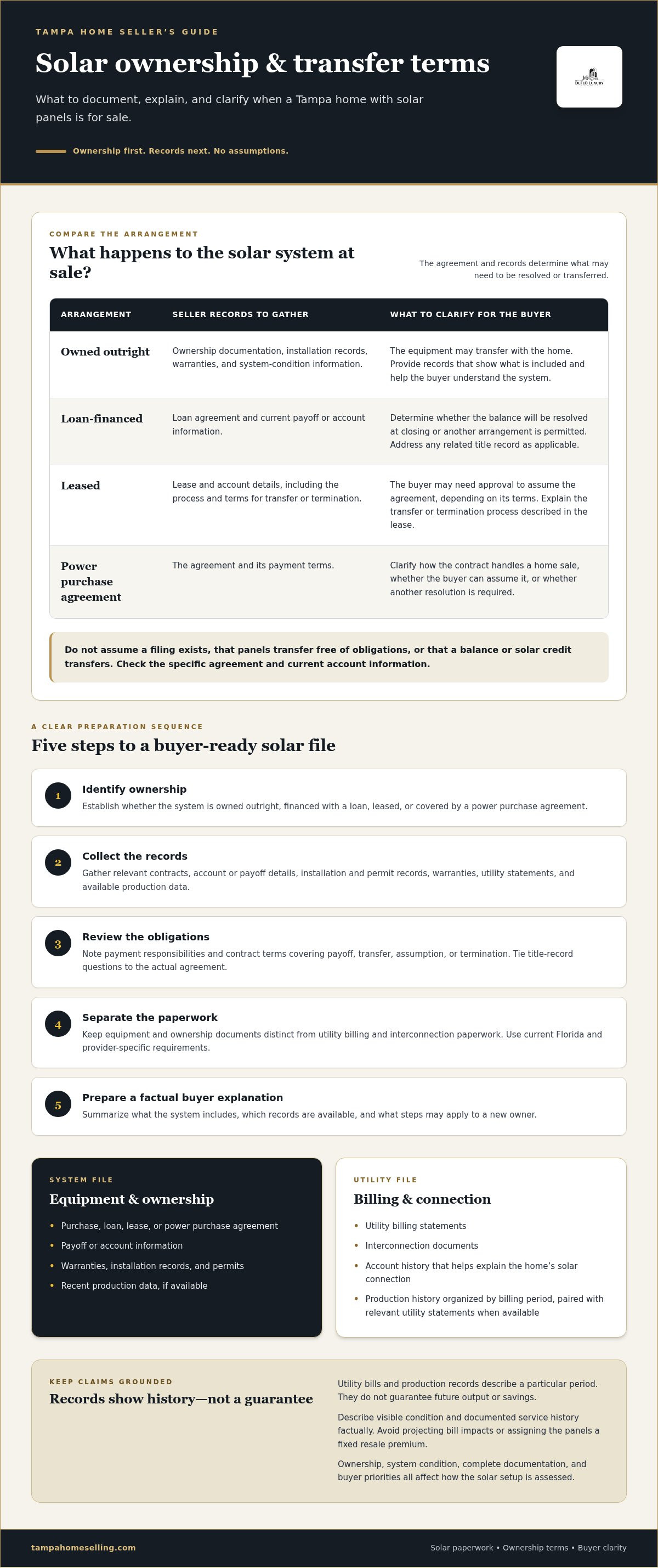
How to Prepare a Solar Home for Sale in Tampa
A buyer-ready solar file gives a clear account of the equipment, its condition, and any remaining obligations. Use this sequence before listing:
- Identify ownership. Establish whether you own the system outright, have a loan, or have a lease or power purchase agreement.
- Collect records. Gather the relevant contracts, account or payoff details, installation and permit records, warranties, utility statements, and production data available to you.
- Review obligations. Note payment responsibilities and any terms covering payoff, transfer, assumption, or termination. Tie questions about title records to the actual agreement.
- Organize disclosures. Separate equipment and ownership documents from utility billing and interconnection paperwork. Use current Florida and provider-specific requirements rather than outdated assumptions.
- Prepare a buyer explanation. Summarize what the system includes, which records are available, and what steps may apply to a new owner.
Describe visible condition and documented service history factually. Utility bills and production records show what happened during a particular period, but they do not guarantee future output or savings. Billing arrangements and solar credits may depend on the current account and utility terms. Don’t assume balances or credits will transfer. Explain what the records show and distinguish it from anything that depends on the account or contract.
How to answer buyer questions about solar
Keep answers brief and supported by paperwork. Explain who owns the equipment, whether payments remain, what warranties apply, which system records are available, and what transfer steps the agreement describes. If a buyer asks about bill impacts, share dated statements or production records as historical context. Avoid projecting future savings because usage, rates, weather, and account terms can change.
Contracts explain ownership and obligations; system records show condition and history; utility documents clarify account-specific billing and connection details. Keeping these materials together helps buyers understand the solar system without relying on assumptions.
For a property-specific view alongside your solar documentation, explore a home valuation as you prepare to list.
Present Your Solar Home Clearly to Tampa Buyers
A strong listing puts the solar system in context with the home’s overall condition, features, and documentation. Present ownership terms alongside available installation, warranty, and production records. Describe what the paperwork supports without promising a particular bill reduction or resale premium. Buyers can assess the panels more confidently when the details contribute to a clear picture of the whole property.
The Pre-Owned Pre-Certified Home Program includes a Pre-Listing Professional Inspection before the home goes on the market. You review the findings in advance and decide how to approach repairs, credits, or pricing. The Pre-Certified Documentation Package includes the inspection report, receipts, warranties, and disclosures. The 1-Year Warranty is optional and available for an additional cost, not included by default.
Assess the property as a whole, including its solar records and broader market context, with a Tampa home valuation.
Choose a selling path with clear expectations
A Traditional Listing presents the home’s features and solar documentation to the market. The Pre-Owned Pre-Certified Home Program adds an inspection and advance review of findings to listing preparation. A 24-Hour Cash Offer is another path to consider, with a closing timeline of Days to weeks. Traditional Listing closings are listed at 30-60+ days. The right fit depends on your priorities and property; no single approach suits every seller. The Guaranteed Sale Program promises to sell qualifying homes in 30 days or sell them for free if the guarantee is not met. The seller must sign the 30 day guarantee documents for the program to be enforced. For broader strategy considerations, see Sell My Home Fast Tampa: The 2026 Guide to Maximum Price and Minimum Time.
What to do before your Tampa solar home goes on the market
Assemble your system records, make ownership and transfer terms easy to explain, and review how those details will appear in the listing materials. Pair solar information with the home’s other documented condition and features so buyers can weigh the evidence without relying on assumptions.
Ready to plan your next steps? Request a free home valuation or seller consultation to discuss your Tampa property.
Set Your Solar Sale Up for a Confident Next Step
Selling a home with solar panels in Tampa is an opportunity to make informed decisions about how your property is presented, not to promise buyers a particular outcome. The Pre-Owned Pre-Certified Home Program includes a Pre-Listing Professional Inspection. You can review the findings in advance and decide how to approach repairs, credits, or pricing.
Your selling plan should fit your home, timing, and priorities. The Guaranteed Sale Program is available only to qualifying homes. You must sign the 30 day guarantee documents for the program to be enforced. If the signed guarantee is not met, the company will sell the home for free. Understanding the terms of the path you choose helps set clear expectations.
Take the next step with a property-specific view of your sale. Request your free Tampa home valuation and start planning your move with confidence. DeFeo Luxury Properties serves homeowners across the Gulf Coast, including Tampa, St. Petersburg, Sarasota, Lakewood Ranch, Bradenton, Parrish, Palmetto, Gulfport, and St. Pete Beach.
Frequently Asked Questions
Do solar panels increase a home's value in Tampa?
Solar panels may support buyer interest, but no fixed Tampa resale increase should be assumed. A buyer may weigh the system differently depending on its condition, documentation, and how its agreement affects ownership. For selling a home with solar panels in Tampa, compare the property with relevant local sales and treat solar as one feature, not a dollar-for-dollar addition. Support any claims about the system with records tied to this home.
Can I sell my Tampa home if the solar panels are leased?
Yes, a home with leased panels can be sold, but the lease can shape the buyer’s route to closing. Before marketing, review the sale and transfer clauses and note any notice, approval, or payoff process they describe. If the agreement requires buyer assumption, explain that early and keep the transfer requirements available rather than presenting the equipment as debt-free.
What documents do I need to sell a home with solar panels?
Gather records showing what the equipment is and which terms apply. Along with ownership, loan, lease, or power purchase agreement papers, include warranty and installation details, permits if available, and dated utility statements or production reports. Label billing statements by period so buyers can distinguish past household use from a forecast. Keep copies organized before showings.
What happens to my solar agreement when I sell my house?
The agreement’s terms determine what happens during a sale. Depending on the contract, a buyer may assume an obligation, or the seller may need to arrange a payoff or another transfer step. Keep the utility account separate from the equipment contract. Explain how the current account handles changes and credits rather than presenting them as guaranteed purchase benefits.
Do I have to disclose solar panels when selling a home in Florida?
Sellers should provide accurate information about solar equipment and related agreements, but specific disclosure obligations depend on the circumstances and current Florida requirements. Don’t treat a generic checklist as legal advice or leave known contract details unexplained. DeFeo Luxury Properties serves buyers and sellers in Tampa, St. Petersburg, Sarasota, Lakewood Ranch, Bradenton, Parrish, Palmetto, Gulfport, and St. Pete Beach.