
Home Appraisal Checklist for Tampa Sellers: 2026
A spotless home can make a strong first impression, but it won’t replace clear evidence of the property’s condition and improvements. This home appraisal checklist for sellers Tampa homeowners can use helps organize that information for the appraiser. It doesn’t determine the final value.
It’s understandable to wonder whether a repair, upgrade, or missing record could affect your sale, especially if an appraisal comes in below your expectations. An appraisal is one valuation opinion, not the same as your asking price or your agent’s pricing analysis. A lower-than-expected result also doesn’t automatically determine what happens next.
Use this checklist to decide what to make accessible, which records to gather, and how to document improvements, including work on the roof, HVAC, plumbing, and electrical systems. You’ll also learn what an appraisal can and can’t tell you, how to review the report, and how to use the information in a broader selling plan for Tampa and Florida’s Gulf Coast.
Key Takeaways
- Organize property records, prepare clear access to the home, and note factual details you may need to explain.
- Gather dated invoices, permits, warranties, and concise descriptions of completed improvements.
- Review the report for specific factual errors, then consider appraisal questions separately from pricing and marketing decisions.
- A pre-listing inspection can help identify property issues before you prepare for market and build your selling plan.
What a Tampa home appraisal means for sellers, and what it does not
Worried that an appraisal could set the ceiling for your Tampa sale? It doesn’t. A home appraisal is an independent opinion of a property’s value for a specific purpose and effective date. The appraiser considers the home and relevant market evidence, but the result isn’t a guarantee of what a buyer will pay. A real estate appraisal can serve different purposes, so the assignment’s context matters.
For sellers, treat the appraisal as one piece of information, not a verdict on your entire selling strategy. It may help explain how the property’s condition and features compare with relevant sales. It doesn’t account for every factor that can shape an offer, negotiations, or the timing of your sale.
Does an appraisal determine your Tampa listing price?
No. An appraisal estimates value for its stated purpose and date. A listing strategy also considers market evidence, competing homes, buyer interest, and your priorities as a seller. An agent’s comparative market analysis, or CMA, draws on comparable sales and local listing conditions to inform pricing and positioning. Your asking price is a marketing decision, not a number an appraiser sets for you.
An appraised value is an opinion for a specific purpose and date, not a promised sale price.
Preparation can make relevant facts easier to review, but it shouldn’t be used to steer the appraiser toward a target. Organize records about the property’s history and improvements, and be ready to clarify factual details. A pre-listing inspection can help identify property issues before you prepare for market. Neither preparation nor a disagreement with the appraiser guarantees a different valuation. The goal is to understand the available evidence so you can make informed selling decisions.
What a Tampa appraiser may review about your home's condition and value
An appraiser considers the property as a whole, not just one upgrade or feature. The review may include the home’s condition, size, layout, and features, as well as comparable sales that help show how similar properties have performed in the market. A renovated kitchen, for example, is useful context, but it doesn’t determine value on its own. The appraiser weighs relevant evidence for the assignment’s purpose and effective date.
Make property facts easy to verify. Gather dated invoices, permits, warranties, and a concise list of completed improvements. For each item, note what work was done and when. Keep the records together in one folder, and distinguish completed work from planned projects. County property records can provide context about recorded characteristics, but they may not reflect the home’s current condition or include every improvement.
Which Tampa-area records and property details are useful?
Compare your notes with available official property records for the county where the home is located, and flag any factual differences for review. If flood exposure or storm repairs are relevant, gather accurate supporting documents, such as repair records, rather than relying on assumptions or outdated map information. Keep the file focused on details that clarify this specific property, not on promotional material.
Why an appraisal may differ from your expectations
The effective date matters because market evidence changes. The assignment’s purpose, the property’s characteristics, and the comparable sales selected can also affect the analysis. An online estimate, tax assessment, or asking price may use a different method or reflect a different purpose and date, so none is automatically equivalent to an appraisal. If you’re also shaping a selling strategy, a Tampa home valuation can help frame pricing discussions, while the appraisal remains its own opinion.
A pre-listing inspection can help identify property issues before you prepare the home for market. Use its findings to understand the home and organize documentation, not to assume a particular appraisal result.
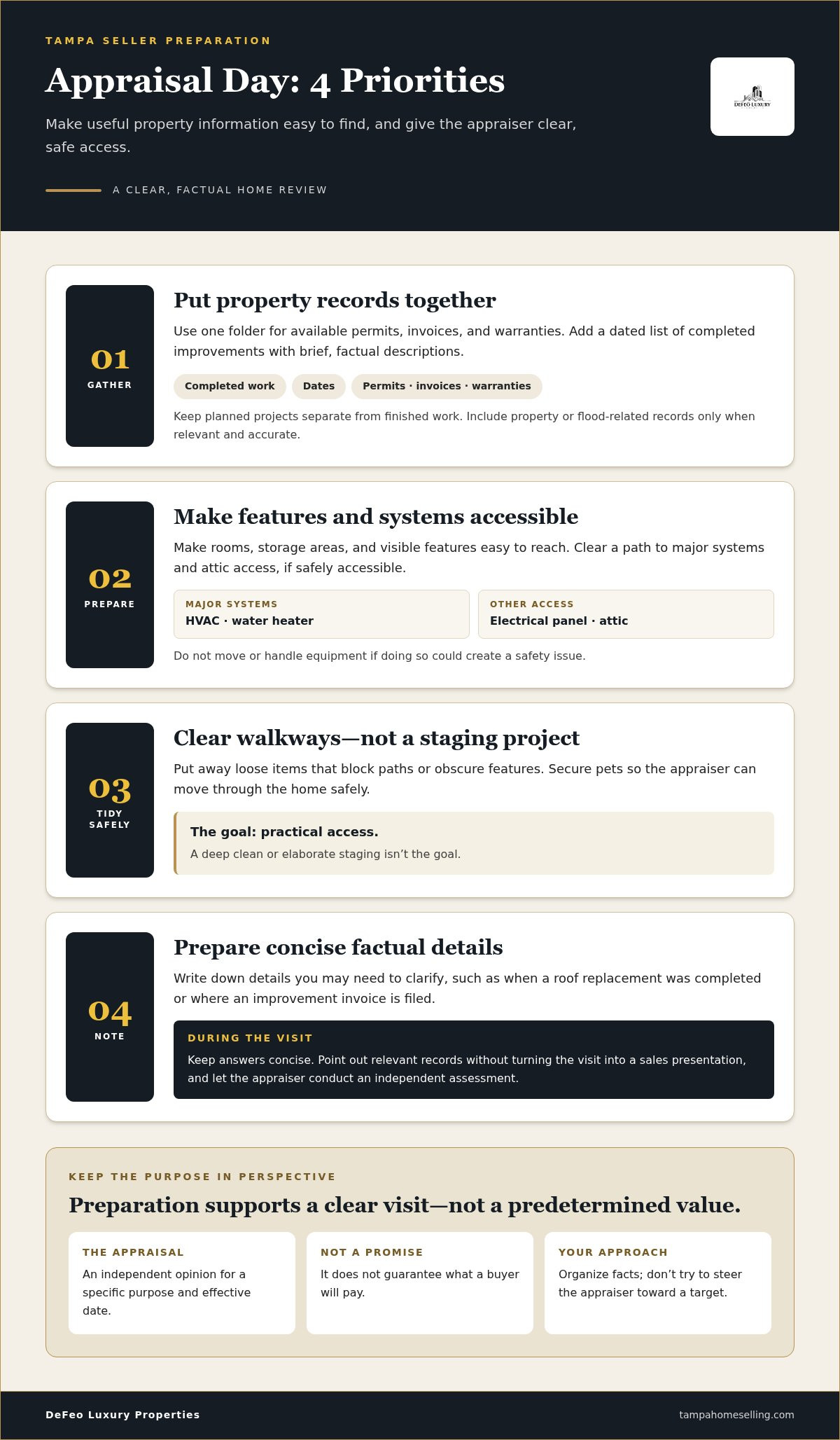
A home appraisal checklist for Tampa sellers before the appointment
Make useful information available, clear access to the home’s features, and let the property speak for itself. Work through these steps before the appointment.
- Gather records. Put available permits, invoices, and warranties in one folder. Add a dated list of completed improvements with brief, factual descriptions. Separate finished work from planned projects. Include property or flood-related records only when they’re relevant and accurate.
- Prepare access. Make rooms, storage areas, and visible features easy to reach. Clear a path to major systems such as the HVAC equipment, water heater, electrical panel, and attic access, if it is safely accessible. Don’t move or handle equipment if doing so could create a safety issue.
- Tidy safely. Put away loose items that block walkways or obscure features, and secure pets so the appraiser can move through the home safely. A deep clean or elaborate staging isn’t the goal. Practical access is.
- Note questions. Write down factual details you want to clarify, such as when a roof replacement was completed or where an improvement invoice is filed. Keep answers concise and let the appraiser conduct an independent assessment.
What should be ready on appraisal day?
Keep the folder somewhere easy to find, and be prepared to point out relevant records without turning the visit into a sales presentation. If you’ve had a pre-listing inspection, its findings may help you understand property issues as you prepare for market, but they don’t dictate the appraiser’s conclusion. Your home appraisal checklist for sellers Tampa should support a clear, calm visit, not attempt to influence the valuation.
Once you’ve organized the home and records, consider how the appraisal fits into the wider selling process. Plan your Tampa home sale with a strategy that considers the property, market evidence, and your priorities.
After the Tampa appraisal: turn the result into a clear selling plan
When you receive the report, separate questions about its accuracy from decisions about how to sell. Review the property details, measurements, improvement descriptions, and comparable sales. A different opinion about value doesn’t, by itself, show that the report contains an error or mean the value will change.
What can you do if the appraisal seems inaccurate?
Look for specific, verifiable discrepancies, such as an incorrect room count, a documented improvement described inaccurately, or a factual detail that appears to be missing. Note the report page and gather supporting records. If the appraisal is tied to a lender’s transaction, follow the lender’s process for raising concerns or requesting a review. A reconsideration request relies on evidence and doesn’t guarantee a revised value.
Assess pricing and marketing separately. The appraisal reflects an opinion for its stated purpose and date. Your listing strategy should also account for current competing homes, buyer response, property condition, and your priorities. Explore Tampa home valuation options as one way to inform that broader conversation, rather than treating the appraisal as an automatic asking price.
How pre-listing planning supports a smoother sale
Good preparation continues beyond the appointment. DeFeo Luxury Properties’ 30-Day Home Selling System incorporates pre-listing inspections to help identify property issues before market preparation, along with AI-driven buyer targeting as part of the selling process. These tools can support an organized selling strategy in Tampa, St. Petersburg, Sarasota, Lakewood Ranch, Bradenton, Parrish, Palmetto, Gulfport, and St. Pete Beach. They don’t control an appraiser’s independent conclusion or guarantee a sale outcome.
Use your home appraisal checklist for sellers Tampa as a starting point: review the report for factual accuracy, keep valuation questions distinct from pricing decisions, and plan next steps around your home and goals. A clear selling plan should connect the property’s condition and market evidence with your priorities.
Move from appraisal preparation to a confident sale plan
Use what you’ve learned about your home to make decisions that fit your priorities. The home appraisal checklist for sellers Tampa gives you a practical starting point, but your sale also needs a plan shaped around timing, presentation, and the buyers you want to reach.
DeFeo Luxury Properties’ 30-Day Home Selling System incorporates pre-listing inspections to help identify property issues before market preparation, while AI-driven buyer targeting is part of the selling system. These are planning tools, not ways to direct an appraiser’s conclusion or promise a particular sale result. The goal is to move ahead with clarity and a strategy tailored to your home.
Ready to plan your sale? Explore a Tampa home-selling strategy built around your goals with DeFeo Luxury Properties. The team serves sellers across Tampa, St. Petersburg, Sarasota, Lakewood Ranch, Bradenton, Parrish, Palmetto, Gulfport, and St. Pete Beach.
Frequently Asked Questions
What should I do before a home appraisal in Tampa?
Confirm the appointment details and make sure the appraiser can enter the property. For this home appraisal checklist for sellers Tampa owners can use, verify that basic facts you plan to share, such as the room count or details of a converted space, are accurate and easy to explain. The same preparation applies in St. Pete Beach.
Does a home appraisal determine the selling price?
No. An appraisal provides a value opinion for its stated purpose and date. It doesn’t set the amount a buyer must offer or a seller must accept. If a buyer’s financing depends on an appraisal, the lender may use the report in its loan decision. Any response, such as discussing revised terms, depends on the parties’ agreement and the terms of the sale.
Can I be present during my home appraisal?
You may be able to attend, depending on how the appointment is arranged. If you’re there, let the appraiser work independently and be available to answer factual questions, such as where a feature is located. Avoid pressing for a particular value or comparing the home to a preferred asking price. A concise, helpful exchange is usually most productive.
What documents should I provide to a home appraiser?
Offer relevant records that clarify the property, such as plans for a major alteration or documentation explaining a feature that may not be obvious during a walkthrough. Keep sensitive originals with you, and label copies so each item is easy to understand. Share accurate, relevant material. A thick packet of unrelated paperwork can make key facts harder to find.
What happens if my Tampa home's appraisal is lower than expected?
A lower-than-expected result doesn’t automatically end a sale. Compare the report with the property and look for specific factual mistakes. If a lender is involved, follow its process for submitting evidence or requesting a review. A different opinion alone may not change the result. Depending on the contract and the buyer’s financing, the parties may discuss terms or other next steps together.